


Executive Summary
9 November 2026
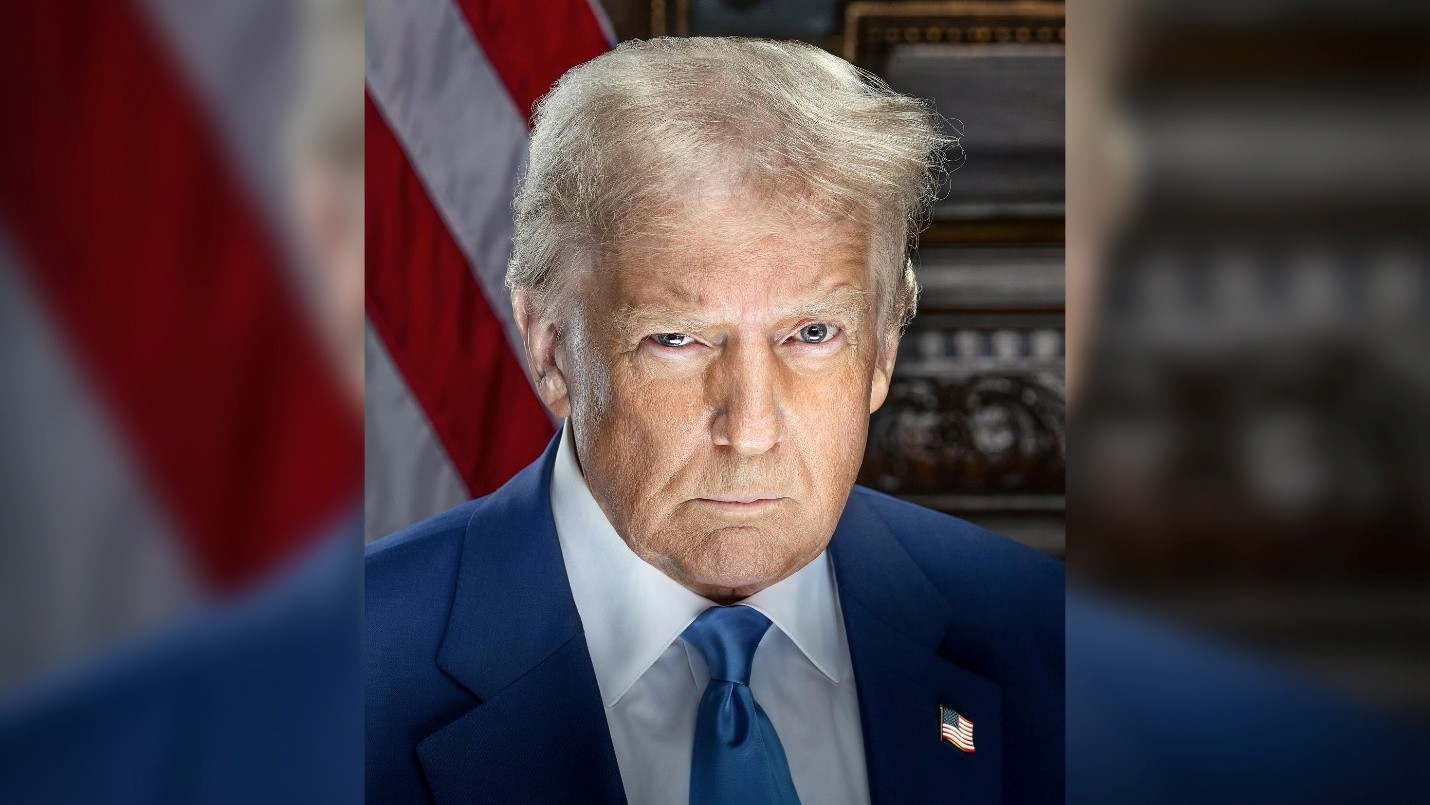
When historians assess Donald Trump’s presidency 50 years from now, what will they identify as his greatest successes and failures, and which of his controversial decisions might ultimately stand the test of time?
A recent video by Anthony Scaramucci about the future of Trumpism prompted me to reflect on this question.
I believe presidential leadership should be evaluated through three dimensions: policy intent, execution, and long-term consequences.
A president can identify a genuine problem but fail in its execution. Equally, a controversial decision today may produce lasting benefits decades later.
With a little over two years remaining in Trump’s second term, it is too early to reach a definitive historical judgment.
Nevertheless, I see six areas that could substantially shape his legacy, each carrying different degrees of concern, opportunity, and long-term historical significance.
Immigration remains my greatest concern, while policies involving Iran, tariffs, and international trade present a more complex picture. I believe some of these actions were necessary, even if I question aspects of their execution. History may ultimately judge their long-term consequences very differently from how we perceive them today.
1. Immigration: America’s Greatest Bipartisan Failure and Trump’s Historic Opportunity
I support strong border security, and Trump deserves credit for taking the issue seriously. But aggressive enforcement, inflammatory rhetoric, and the treatment of longtime undocumented residents have created fear and division. Comprehensive immigration reform has eluded both parties for nearly four decades.
One significant development has been the administration’s effort to access confidential IRS taxpayer information. In an October 2026 PBS NewsHour interview, author Michael Lewis described an IRS database containing approximately seven million tax returns associated with undocumented workers. Separately, court records show that ICE requested taxpayer information concerning more than 7.6 million individuals, and the IRS ultimately disclosed over 47,000 taxpayer addresses.
For decades, undocumented immigrants have filed income tax returns, including through the Individual Taxpayer Identification Number (ITIN) system. The use of taxpayer information for immigration enforcement raises broader questions about confidentiality, voluntary tax compliance, and public trust in government institutions.
Many longtime undocumented residents have raised American-citizen children who are now voters. For these young Latino Americans, as well as their friends and classmates from diverse backgrounds, immigration enforcement can be deeply personal. That does not mean Latino or younger voters automatically support Democrats, but Republicans risk alienating a generation if they overlook the human consequences of family separation.
My analysis of the 2026 Texas elections raises another important consideration. Changing demographics and voting patterns, particularly among younger voters and in South Texas, could eventually challenge Republicans’ longstanding electoral advantage.
With Texas carrying 40 Electoral College votes, a future Democratic victory would significantly complicate the electoral mathematics for Republicans. Texas may not be turning blue today, but assuming it will remain reliably Republican indefinitely could prove to be a strategic mistake. Comprehensive immigration reform is therefore not just a policy challenge, but potentially a long-term political necessity.
There is also the unresolved issue of Temporary Protected Status (TPS) and humanitarian parole. Some people from Haiti, Nicaragua, Honduras, El Salvador, and other countries have lived and worked under temporary protections for years, sometimes decades. More recent authorized parole processes covered eligible people from Cuba, Haiti, Nicaragua, and Venezuela. These programs do not guarantee permanent residence, but their repeated use and changing rules highlight the need for clearer, durable policy.
I propose a bipartisan middle ground: citizenship for qualifying Dreamers; secure legal residency, with no pathway to citizenship or voting rights, for eligible undocumented adults who have resided in America since before January 1, 2021; and fair individualized treatment of recent arrivals and humanitarian claims.
Legal immigration also needs reform, including employment-based green-card modernization, greater employment freedom after I-140 approval, protections for H-4 spouses, and safeguards for American workers.
The historical opportunity: Immigration could become one of Trump’s greatest failures if enforcement remains the predominant response—or one of his enduring achievements if he delivers meaningful bipartisan reform.
2. Tax Cuts, Fiscal Responsibility, and Growing Wealth Inequality
Trump’s 2017 corporate tax reduction from 35% to 21% was intended to stimulate investment, productivity, and job creation.
While lower taxes were intended to stimulate economic growth and productive investment, I question how much of those benefits actually materialized or translated into broader economic opportunity, rather than disproportionately enriching shareholders through massive stock buybacks.
The subsequent tax legislation offers meaningful relief to some working families through provisions affecting tips, overtime, and child tax credits. However, reductions in federal healthcare spending raise concerns about affordability and economic security.
I believe tax policy must be evaluated not simply by how much wealth an economy generates, but by whether ordinary Americans have meaningful opportunities to build financial security.
The historical risk: Pursuing tax relief without sufficient attention to fiscal sustainability, healthcare security, and growing wealth inequality.
3. Technology, Artificial Intelligence, and the Concentration of Economic Power
Artificial intelligence represents one of the most significant technological transformations of our time, with enormous potential to improve productivity, accelerate scientific discovery, transform industries, and strengthen America’s global competitiveness. Trump’s emphasis on American leadership in AI is understandable, particularly given the strategic competition with China. However, technological leadership must be accompanied by responsible governance, economic discipline, and a commitment to ensuring that the benefits extend beyond a handful of powerful corporations.
The United States needs to move quickly toward a coherent regulatory framework for AI and large language models. This should not mean regulation for its own sake or unnecessary restrictions that stifle innovation. Rather, smart regulation should focus on transparency, accountability, data privacy, intellectual property, safety, and responsible AI deployment in critical sectors such as healthcare, finance, education, and government. Policymakers must also address the growing concentration of computing resources, data, and market power among a relatively small number of technology companies.
An equally important concern is the financial sustainability of the AI investment boom. Companies are committing hundreds of billions of dollars to data centers, advanced chips, and energy infrastructure, often well ahead of demonstrated returns. Some leading AI developers continue to generate substantial losses and negative free cash flow, relying on equity financing, strategic partnerships, and access to capital markets. Complex financial relationships among chip manufacturers, cloud providers, AI developers, and investors raise questions about whether investment commitments are supported by sustainable end-user demand or, in some cases, reinforced through circular financing arrangements.
The rapid expansion of AI data centers also raises concerns about electricity demand, higher utility bills, water consumption, and land use. While these investments can strengthen America’s technological infrastructure and create economic opportunities, their impact varies considerably across communities. Policymakers and utility regulators must ensure that the costs of expanding power generation, transmission, water systems, and related infrastructure are not disproportionately passed on to households and small businesses. Technology companies should bear a fair share of the infrastructure costs and financial risks associated with their projects.
The risk is not necessarily that AI will fail as a technology, but that investment expectations may run ahead of enterprise adoption, productivity gains, and sustainable profitability. Higher financing costs, infrastructure constraints, and slower-than-expected returns could expose weaknesses in these business models. Policymakers should ensure that a handful of dominant AI companies do not become so deeply embedded in America’s economic infrastructure that their financial difficulties create pressure for taxpayer-funded bailouts. Private investors should bear the consequences of commercial risks rather than assuming government intervention when investments fail.
At the same time, excessive regulation could undermine American innovation and competitiveness. The challenge is to establish sensible safeguards, promote competition, encourage responsible investment, and prepare the workforce for the changes AI will bring. Enterprise adoption must ultimately demonstrate measurable business value, not merely experimentation or technological enthusiasm.
The historical question: Will Trump’s AI policies establish American technological leadership while encouraging responsible innovation, sustainable investment, healthy competition, and broad-based productivity gains? Or will insufficient oversight allow excessive financial risk, concentrated corporate power, and infrastructure costs to develop, leaving future administrations, taxpayers, and ordinary Americans to manage the consequences?
4. Ethics, Family Business Interests, and the Presidency
The growing intersection of political authority, private investments, family business interests, and foreign financial relationships raises legitimate questions about presidential ethics.
Some activities may be legally permissible without necessarily meeting the higher ethical standards expected of public office.
This principle should apply equally to Republicans and Democrats. Allegations must be distinguished from proven misconduct, and political disagreements should never replace evidence.
The historical risk: Weakening public confidence in government by allowing the boundaries between public responsibility and private financial interests to become increasingly blurred.
5. Iran, Israel, Gaza, and the Middle East: Strategic Intent Versus Human Consequences
I recognize the legitimate objective of reducing Iran’s support for militant organizations, limiting its military and nuclear capabilities, and creating the conditions for greater regional stability. A more stable Middle East, with greater freedom for the Iranian people, could become a meaningful long-term achievement.
Unlike the prolonged ground wars in Afghanistan and Iraq, Trump’s strategy has largely relied on targeted military operations, economic sanctions, and pressure without committing American ground forces to an invasion of Iran. This has limited the scale of American military casualties compared with earlier conflicts and represents an important distinction in his approach.
However, a significant weakness has been the administration’s inability to build a broader international coalition, particularly among Gulf countries such as Qatar and European allies. The Strait of Hormuz, through which approximately one-fifth of global petroleum consumption and a substantial share of liquefied natural gas trade flows, makes this a global economic concern. The absence of a stronger coalition and a clearly established international framework has complicated the administration’s strategy.
Prolonged negotiations have produced limited lasting progress, while continued sanctions and economic pressure may weaken Iran’s ability to sustain its military and political institutions. Whether this ultimately leads to meaningful political change remains uncertain. A weakened Iranian government does not necessarily mean a more stable Iran, and any transition would need to avoid the instability experienced in previous Middle Eastern conflicts.
The suffering in Gaza also demands moral consideration. Israel’s legitimate security concerns and the atrocities committed by Hamas do not eliminate the responsibility to protect civilians or evaluate whether military responses are proportionate.
The historical question: Can Trump translate military pressure and economic sanctions into lasting regional stability, reduced Iranian threats, and greater freedom for the Iranian people without another prolonged American ground war? Or will the absence of a broader international coalition and a sustainable political settlement undermine what could otherwise become a significant part of his legacy?
6. Tariffs, Manufacturing, and NATO: Potentially Trump’s Most Durable Positive Legacy
Trump’s approach to tariffs, trade negotiations, and NATO represents a significant departure from decades of American economic and foreign policy. While his methods have often been confrontational and unpredictable, the underlying objectives of strengthening domestic manufacturing, reducing dependence on foreign supply chains, addressing unfair trade practices, and encouraging NATO allies to assume greater responsibility for their defense deserve serious consideration.
One potentially significant achievement is the scale of investment being announced across the United States. Trump has cited more than $20 trillion in prospective investments, while the White House’s November 2026 investment tracker identifies approximately $11.3 trillion in announcements and commitments. These include roughly $3.1 trillion in technology and AI, $1.15 trillion in manufacturing and industry, and substantial commitments in pharmaceuticals, energy, and infrastructure. However, approximately $5.8 trillion of the reported total relates to country-level and trade agreements, some of which represent broader economic ambitions rather than firm capital investments. Nevertheless, these announcements suggest meaningful momentum toward expanding America’s industrial and technological capabilities.
The more important question is how much of this investment will actually materialize. There are several milestones between announcing an investment and delivering economic value: securing financing, obtaining regulatory approvals, beginning construction, commissioning facilities, and achieving sustained commercial production. In capital-intensive industries such as semiconductors, pharmaceuticals, and energy, this process can take five to ten years or longer. Construction creates immediate economic activity, but the lasting benefits come from competitive production, sustainable employment, stronger supply chains, and improved productivity. Some investments were planned before Trump’s return to office, while others may have been accelerated by his policies. His economic legacy should therefore be measured not by the trillions announced, but by the capital actually deployed and the economic benefits ultimately delivered.
Perhaps the most unconventional aspect of Trump’s industrial strategy is his willingness to take direct government ownership stakes in private companies, an approach more commonly associated with state-directed economic policy than traditional Republican free-market capitalism. In August 2025, the administration acquired approximately 10% of Intel through an $8.9 billion equity arrangement, largely converting previously approved federal funding into ownership. Similar investments have involved MP Materials, Lithium Americas, and USA Rare Earth, while the government secured special governance rights in U.S. Steel. Although this approach challenges traditional Republican economic philosophy, there is a practical argument in its favor: when taxpayers provide substantial financial support to strategically important companies, they should also have an opportunity to participate in the financial upside. In other words, the government has skin in the game rather than simply providing subsidies.
However, government ownership also creates risks of political favoritism, market distortion, and taxpayer losses. The real test is whether these investments can strengthen critical domestic industries, reduce dependence on foreign suppliers, and deliver sustainable commercial returns without undermining private-sector competition. Government participation alone does not guarantee success.
Tariffs themselves are not without consequences. American importers, businesses, and consumers often bear significant costs, while retaliatory measures can hurt exporters and farmers. The challenge is whether the long-term benefits of domestic investment, industrial resilience, and stronger negotiating leverage outweigh the near-term economic disruption and higher prices. Tariffs should be evaluated as an instrument of economic strategy, not as an achievement in themselves.
Similarly, Trump’s insistence that NATO allies increase defense spending addresses a longstanding imbalance in burden-sharing. A stronger European contribution to collective defense could ultimately benefit both the United States and the alliance. However, achieving that objective without weakening trust, cooperation, and America’s strategic relationships remains equally important.
The historical question: Will Trump’s unconventional approach produce a more competitive American industrial base, stronger supply chains, sustainable employment, and a more balanced NATO alliance? Or will the economic costs, government intervention, policy uncertainty, and strained international relationships outweigh those gains? The answer may take another decade to become clear, and the eventual results—not the announcements or political rhetoric—will determine his legacy.
The Final Chapter Has Not Yet Been Written
I do not believe history will judge Trumpism as an entirely successful or entirely failed political movement.
Trump identified genuine national challenges. But recognizing problems is not the same as solving them.
My greatest concerns involve immigration enforcement, fiscal sustainability, the concentration of technological and economic power, and the ethical boundaries of presidential authority.
Conversely, industrial revitalization, greater international defense burden-sharing, and a more stable Middle East could become significant accomplishments—provided their benefits are durable and their human and economic costs are properly considered.
Of all the opportunities remaining in Trump’s presidency, I believe bipartisan immigration reform could do the most to reshape his historical legacy.
But responsibility does not rest with Trump alone.
The Democrats’ gains in the 2026 midterm elections have given them an opportunity to influence America’s direction. Congressional oversight and accountability are important, but investigations, impeachment debates, and internal ideological divisions cannot become substitutes for governing.
Both parties must demonstrate that they can move beyond political confrontation and deliver practical solutions on immigration, healthcare, affordability, employment, and economic opportunity.
Fifty years from now, historians may conclude that Trump’s greatest failure was not his inability to recognize America’s problems, but his inability to build the bipartisan coalitions, institutions, and public trust necessary to solve them.
But that conclusion is not inevitable.
Ultimately, history will not judge political leaders simply by the elections they won, the opponents they defeated, or the headlines they generated. It will judge whether their decisions left America stronger, more prosperous, more united, and better prepared for the future.
That, to me, is the difference between winning political battles and building a lasting national legacy.
Read the complete analysis:
IN PDF
Trumpism: How Will History Judge It 50 Years From Now?
A Personal Note on My Perspective
I am a lawful permanent resident of the United States, with no affiliation to any political party.
I am simply an independent political enthusiast who enjoys following American politics, public policy, and global affairs.
These views are strictly personal, reflect my understanding as of November 2026, and are subject to change as new information and evidence emerge.
My observations are based on publicly available information.
I recognize that political and media coverage can be highly selective and biased, often presenting the same events through very different lenses.
I make a conscious effort to examine arguments, evidence, and perspectives from both sides of the political spectrum before forming my own conclusions.
I do not believe any political party has a monopoly on good ideas, bad decisions, or ethical failures.
My interest is not in defending a political party or attacking one, but in understanding how today’s decisions will shape America’s future.
Ultimately, history will judge outcomes, not intentions or political slogans.
This reflection was prompted by Anthony Scaramucci’s video, “These Are the Things That DESTROYED Trumpism”:
Related Posts
The 2028 Rhyme: Why the Next President Is Likely to Be Born After 1977
Forget personalities. The generational math of 2028 is already taking shape. Political leadership in the…

How to win or draw in 4th inning of cricket test match Overseas?
If you are an Indian cricket supporter, you were disappointed one more time this weekend.…

Devil is in the Details as Statistics are like Miniskirts
In the world of Big Data Analytics and Alternative Facts, it is essential that we…

Linkedin Profile Photo Really Matters!!!
One of my friends recently saw my professional profile photo and politely told me that…