


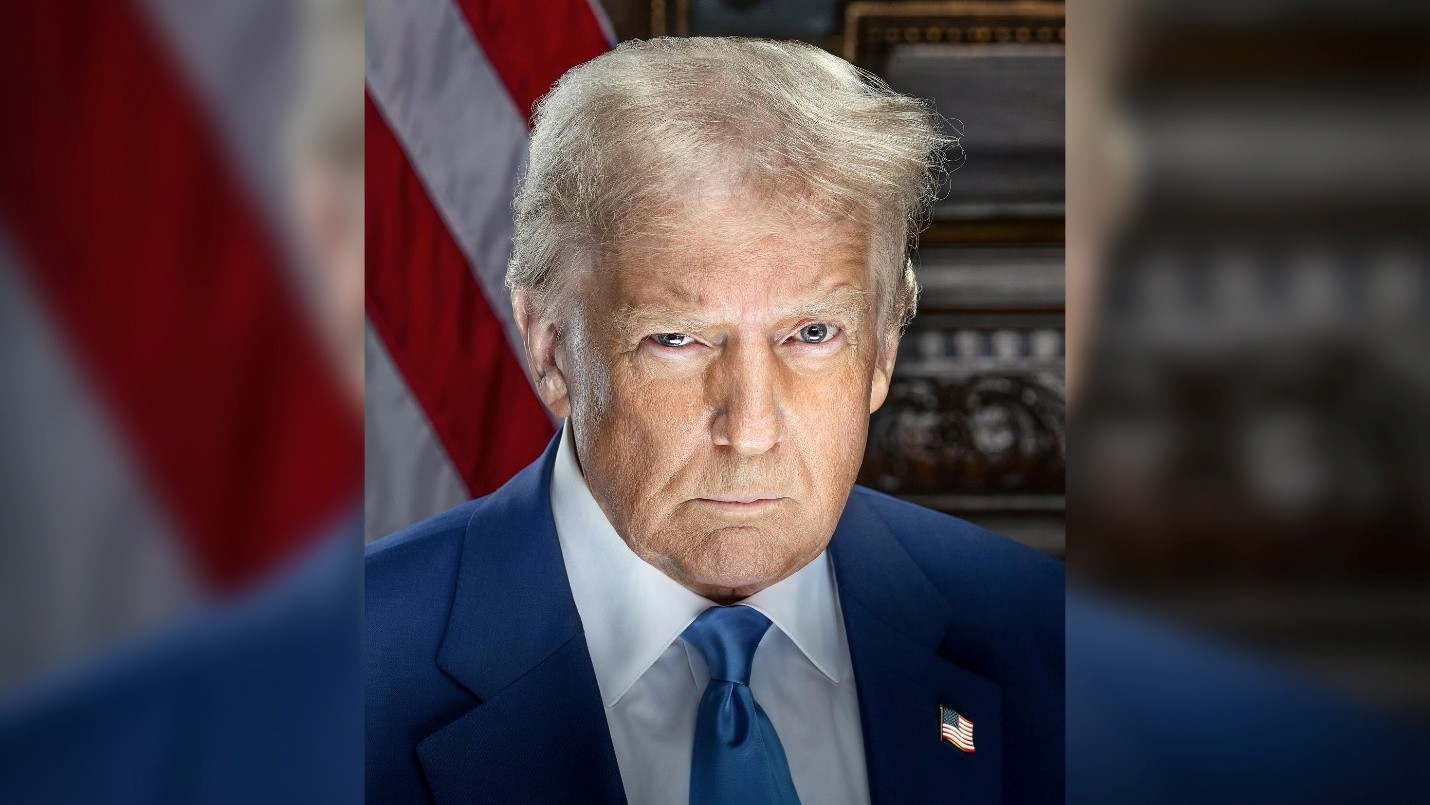
Executive Summary
9 November 2026
When historians assess Donald Trump’s presidency 50 years from now, what will they identify as his greatest successes and failures, and which of his controversial decisions might ultimately stand the test of time?
A recent video by Anthony Scaramucci about the future of Trumpism prompted me to reflect on this question.
I believe presidential leadership should be evaluated through three dimensions: policy intent, execution, and long-term consequences.
A president can identify a genuine problem but fail in its execution. Equally, a controversial decision today may produce lasting benefits decades later.
With a little over two years remaining in Trump’s second term, it is too early to reach a definitive historical judgment.
Nevertheless, I see six areas that could substantially shape his legacy, each carrying different degrees of concern, opportunity, and long-term historical significance.
Immigration remains my greatest concern, while policies involving Iran, tariffs, and international trade present a more complex picture. I believe some of these actions were necessary, even if I question aspects of their execution. History may ultimately judge their long-term consequences very differently from how we perceive them today.
1. Immigration: America’s Greatest Bipartisan Failure and Trump’s Historic Opportunity
I support strong border security, and Trump deserves credit for taking the issue seriously. But aggressive enforcement, inflammatory rhetoric, and the treatment of longtime residents have created fear and division. Comprehensive immigration reform has eluded both parties for nearly four decades.
Many longtime undocumented residents have raised American-citizen children who are now voters. For these young Latino Americans, as well as their friends and classmates from diverse backgrounds, immigration enforcement can be deeply personal. That does not mean Latino or younger voters automatically support Democrats, but Republicans risk alienating a generation if they overlook the human consequences of family separation.
There is also the unresolved issue of Temporary Protected Status (TPS) and humanitarian parole. Some people from Haiti, Nicaragua, Honduras, El Salvador, and other countries have lived and worked under temporary protections for years, sometimes decades. More recent authorized parole processes covered eligible people from Cuba, Haiti, Nicaragua, and Venezuela. These programs do not guarantee permanent residence, but their repeated use and changing rules highlight the need for clearer, durable policy.
I propose a bipartisan middle ground: citizenship for qualifying Dreamers; secure legal residency, with no pathway to citizenship or voting rights, for eligible undocumented adults who have resided in America since before January 1, 2021; and fair individualized treatment of recent arrivals and humanitarian claims. Legal immigration also needs reform, including employment-based green-card modernization, greater employment freedom after I-140 approval, protections for H-4 spouses, and safeguards for American workers.
The historical opportunity: Immigration could become one of Trump’s greatest failures if enforcement remains the predominant response—or one of his enduring achievements if he delivers meaningful bipartisan reform.
2. Tax Cuts, Fiscal Responsibility, and Growing Wealth Inequality
Trump’s 2017 corporate tax reduction from 35% to 21% was intended to stimulate investment, productivity, and job creation.
While lower taxes provided economic benefits, I question whether enough of those gains translated into productive investment and broader economic opportunity rather than increased shareholder wealth.
The subsequent tax legislation offers meaningful relief to some working families through provisions affecting tips, overtime, and child tax credits. However, reductions in federal healthcare spending raise concerns about affordability and economic security.
I believe tax policy must be evaluated not simply by how much wealth an economy generates, but by whether ordinary Americans have meaningful opportunities to build financial security.
The historical risk: Pursuing tax relief without sufficient attention to fiscal sustainability, healthcare security, and growing wealth inequality.
3. Technology, Artificial Intelligence, and the Concentration of Economic Power
America must remain a global leader in artificial intelligence. But technological leadership should not become an excuse for inadequate oversight or excessive concentration of economic and political influence.
Trump’s close alignment with powerful technology executives raises questions about whose interests shape national technology policy.
Competition with China is real, particularly in areas involving national security. However, winning the AI race should mean more than building larger data centers, investing enormous amounts of capital, and creating extraordinary wealth for a relatively small group of companies.
It should also mean greater productivity, better employment opportunities, responsible investment, and economic benefits that reach ordinary Americans.
The historical risk: Allowing geopolitical competition and corporate influence to substitute for a coherent national AI strategy that balances innovation, accountability, economic sustainability, and public benefit.
4. Ethics, Family Business Interests, and the Presidency
The growing intersection of political authority, private investments, family business interests, and foreign financial relationships raises legitimate questions about presidential ethics.
Some activities may be legally permissible without necessarily meeting the higher ethical standards expected of public office.
This principle should apply equally to Republicans and Democrats. Allegations must be distinguished from proven misconduct, and political disagreements should never replace evidence.
The historical risk: Weakening public confidence in government by allowing the boundaries between public responsibility and private financial interests to become increasingly blurred.
5. Iran, Israel, Gaza, and the Middle East: Strategic Intent Versus Human Consequences
I recognize the legitimate objective of reducing Iran’s support for militant organizations and limiting threats to regional security. A more stable Middle East, with greater freedom for the Iranian people, could become a meaningful long-term achievement.
But tactical military success does not automatically translate into strategic victory.
The conflict with Iran raises questions about whether the administration adequately anticipated the resilience of Iranian military institutions, the consequences of leadership strikes, and the economic risks of regional escalation.
The suffering in Gaza also demands moral consideration. Israel’s legitimate security concerns and the atrocities committed by Hamas do not eliminate the responsibility to protect civilians or evaluate whether military responses are proportionate.
The historical question: Will these decisions produce lasting regional stability and improved security, or will their human and economic consequences outweigh the strategic gains?
6. Tariffs, Manufacturing, and NATO: Potentially Trump’s Most Durable Positive Legacy
This is where I believe Trump may receive more historical credit than many of his critics anticipate.
For decades, America tolerated manufacturing dependencies, vulnerable supply chains, trade imbalances, and unequal defense burden-sharing among allies.
Trump challenged those assumptions.
His tariff policies have often been unpredictable and economically disruptive, and tariffs impose real costs on American businesses and consumers. Nevertheless, the broader objective of strengthening domestic manufacturing and reducing strategic dependencies deserves serious consideration.
Similarly, encouraging NATO allies to assume greater responsibility for their defense is a legitimate objective, even when the diplomatic approach has been unnecessarily confrontational.
The potential historical achievement: If these policies translate into durable manufacturing capacity, stronger supply chains, productive investment, better-paying jobs, and a more capable NATO alliance, historians may judge Trump’s strategic direction more favorably than his execution.
The Final Chapter Has Not Yet Been Written
I do not believe history will judge Trumpism as an entirely successful or entirely failed political movement.
Trump identified genuine national challenges. But recognizing problems is not the same as solving them.
My greatest concerns involve immigration enforcement, fiscal sustainability, the concentration of technological and economic power, and the ethical boundaries of presidential authority.
Conversely, industrial revitalization, greater international defense burden-sharing, and a more stable Middle East could become significant accomplishments—provided their benefits are durable and their human and economic costs are properly considered.
Of all the opportunities remaining in Trump’s presidency, I believe bipartisan immigration reform could do the most to reshape his historical legacy.
But responsibility does not rest with Trump alone.
The Democrats’ gains in the 2026 midterm elections have given them an opportunity to influence America’s direction. Congressional oversight and accountability are important, but investigations, impeachment debates, and internal ideological divisions cannot become substitutes for governing.
Both parties must demonstrate that they can move beyond political confrontation and deliver practical solutions on immigration, healthcare, affordability, employment, and economic opportunity.
Fifty years from now, historians may conclude that Trump’s greatest failure was not his inability to recognize America’s problems, but his inability to build the bipartisan coalitions, institutions, and public trust necessary to solve them.
But that conclusion is not inevitable.
Ultimately, history will not judge political leaders simply by the elections they won, the opponents they defeated, or the headlines they generated. It will judge whether their decisions left America stronger, more prosperous, more united, and better prepared for the future.
That, to me, is the difference between winning political battles and building a lasting national legacy.
—
This is my independent assessment as of November 2026. I have no political party affiliation, and I welcome thoughtful disagreement.
Read the complete analysis:
IN PDF
Trumpism: How Will History Judge It 50 Years From Now?
About the Author
Sandeep Sastry is an enterprise strategy and technology leader with experience at Cisco Systems, Chevron, and Pure Storage. Drawing on his background in strategic planning, technology, and cross-functional leadership, he brings an independent perspective to examining public policy, leadership decisions, and their long-term consequences.
Related Posts
The 2028 Rhyme: Why the Next President Is Likely to Be Born After 1977
Forget personalities. The generational math of 2028 is already taking shape. Political leadership in the…

How to win or draw in 4th inning of cricket test match Overseas?
If you are an Indian cricket supporter, you were disappointed one more time this weekend.…

Devil is in the Details as Statistics are like Miniskirts
In the world of Big Data Analytics and Alternative Facts, it is essential that we…

Linkedin Profile Photo Really Matters!!!
One of my friends recently saw my professional profile photo and politely told me that…